
From the first problem to a system that runs every day.
Since 2020, Easy Alo has framed the problem, designed the solution and operated systems that run every day — for businesses and institutions spanning healthcare, education, retail and logistics through to manufacturing, finance and the public sector.
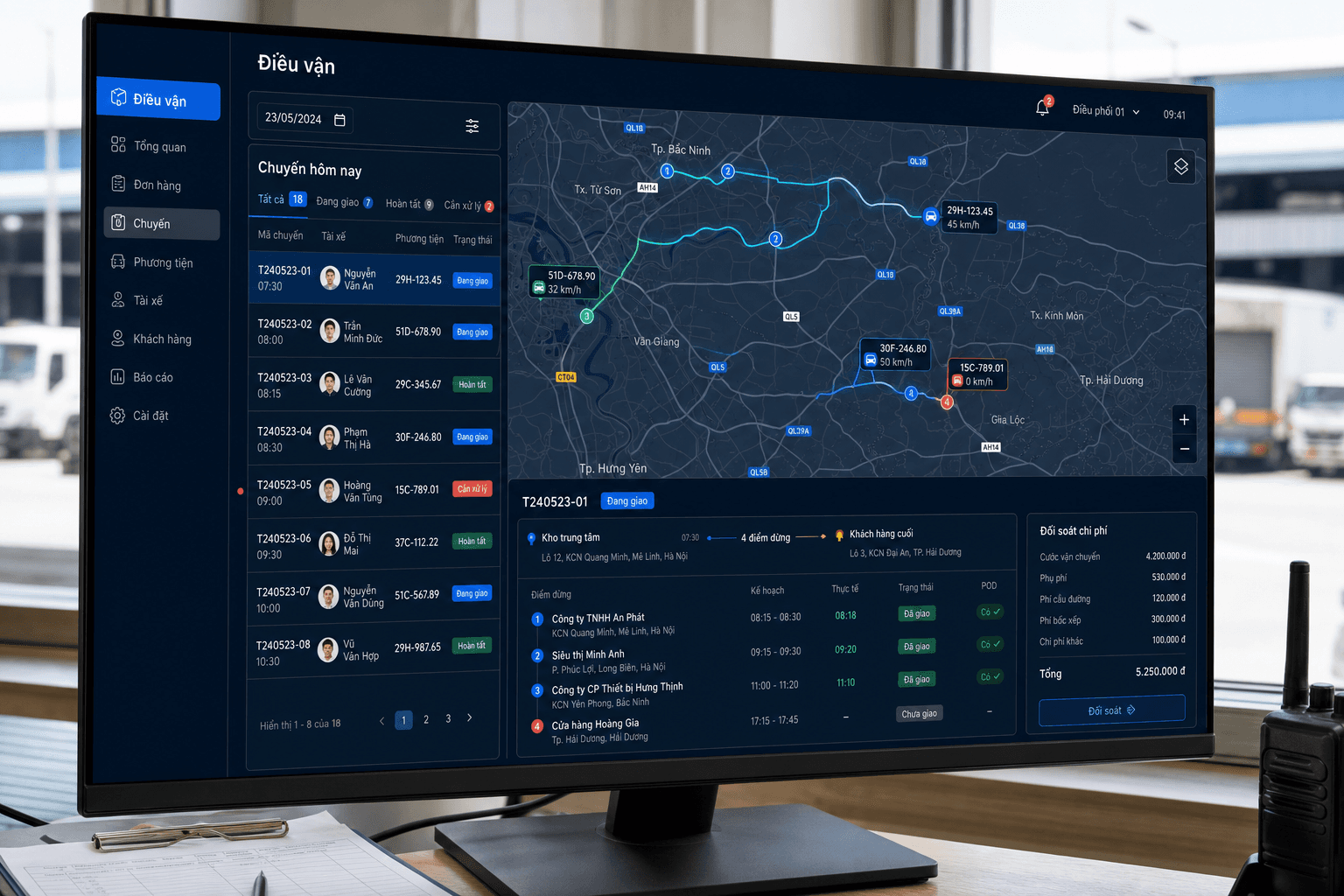
- Users
- Dispatch, drivers, finance, customers
- Core records
- Trips, stops, proof of delivery
- Interfaces
- Operations web & mobile flow
- Outputs
- Tracking, POD, cost reconciliation
Three representative systems from the projects we have delivered. Interfaces are rebuilt; client identities and operating data are withheld under a non-disclosure agreement.
View case studyTrip-level dispatch — From dispatch spreadsheets to one trip-centred workspace
- 6 yearsBuilding and operating digital products without a break
- 10+ sectorsHealthcare and retail through to manufacturing, finance and government
- 2 weeksOne demo cadence on a real environment, not a wait until the end
- 100%Source code, documentation and admin rights are yours
Sectors
Sectors we have shipped into
Every industry runs on its own rules, so we start by learning yours. What they share is a system that has to be right every day, under real pressure.
- Healthcare & diagnostics
- Education & training
- Retail & e-commerce
- Transport & logistics
- Manufacturing & supply chain
- Banking, finance & insurance
- Real estate & construction
- Agriculture & F&B
- Travel, hospitality & services
- Technology & SaaS
- Public sector & non-profits
Capabilities
From a business problem to a product that performs.
One team across all four stretches — discovery, design, development, operation — instead of a hand-off through layers of intermediaries.
Engineering standards
Quality gets measured, not promised.
The five criteria below sit in the acceptance criteria of every project, whatever platform the system is built on. They are measured and reported, not added at the end if time allows.
- Signed-off spec✓In acceptance
The problem framed before the solution is picked
We study the process already running, surface the constraints and the edge cases, then agree a specification and its acceptance criteria before the first line of code is written.
- 99.9% uptime✓In acceptance
Systems you can rely on
The architecture is designed to absorb local failure: heavy work isolated, retries in place, scheduled backups and rehearsed recovery — so one small incident never stops the whole operation.
- P95 < 500 ms✓In acceptance
Performance against a stated threshold
Every critical screen and API has a response threshold agreed up front, measured under load that simulates real volume, and reported before handover.
- OWASP Top 10✓In acceptance
Security designed in
Role-based access, encryption of sensitive data, audit logging and an OWASP Top 10 review are mandatory checks before anything reaches production.
- 24/7 monitoring✓In acceptance
Operable, not merely running
Centralised logs, automated alerts and an incident procedure are in place the day the system goes live, with documentation so your team can run it themselves.

How we deliver
We are not tied to a platform or a vendor. Technology is chosen for the problem, for the systems you already run and for long-term maintainability — then documented well enough for another team to take over.
- Analysis & design
- Process discoverySystem architectureData modelling
- Build
- Web & mobile appsInternal systemsIntegrations & APIs
- Quality & security
- Automated testingCode reviewAccess control & encryption
- Operations
- Automated deploymentMonitoring & alertingBackup & recovery

How we work
Clarity at every stage.
You always know where the project stands, which decisions are being made and what comes next.
- 01Discover
- 02Frame
- 03Design
- 04Build
- 05Verify
- 06Launch

Next step
Have a problem worth solving?
Start with one conversation about goals, scope and constraints. What you get back is a concrete proposal, not a pitch.