Available-to-sell, not theoretical stock
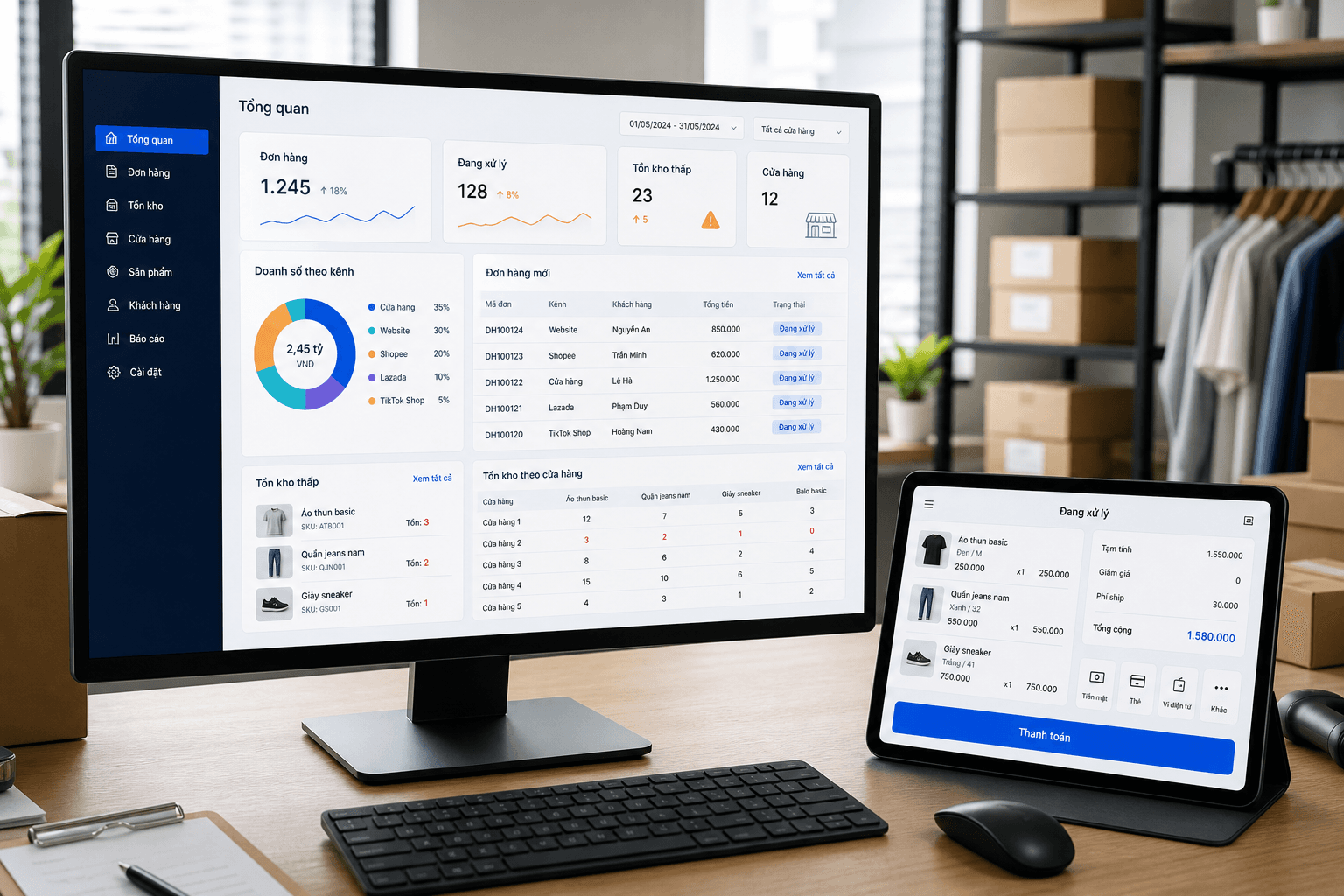
On-hand, reserved and sellable quantities are separated to reduce the pattern of accepting an order before discovering the item is unavailable.
Southern Vietnam retail chain
Easy Alo brought orders, inventory and fulfilment across more than 40 stores into one omnichannel operating platform, so teams know what is available, where it is and what must happen next.
 Featured caseSouthern Vietnam retail chain
The company's identity and transaction data are withheld under NDA. Product imagery is an illustrative reconstruction of delivered operating flows and contains no client data.
Challenge
When every channel holds a different inventory number, the problem goes far beyond delayed reporting. One item can be sold twice; store staff call the warehouse to confirm availability; online orders arrive without clear ownership; and returns create another discrepancy. The business needed one operating model without asking more than 40 stores to change everything overnight.
Solution
Easy Alo designed a central orchestration layer for products, inventory and orders. Every order enters one queue with its source, reserved location, handling deadline and owner. Allocation rules choose the right store or warehouse from available-to-sell stock, while changes from checkout, delivery and returns post back to one inventory ledger. The management view prioritises exceptions that need action instead of filling the screen with decorative charts.
Inside the product
On-hand, reserved and sellable quantities are separated to reduce the pattern of accepting an order before discovering the item is unavailable.
Website, marketplace and store orders use the same states, deadlines and action history, so teams no longer reconcile multiple screens.
Late orders, negative stock, unusual cancellations and return discrepancies enter an action queue with a clear owner.
Delivery
We worked with stores, warehouse teams and customer service to locate the handoffs where context was lost.
A shared data dictionary came before channel integrations, preventing fast synchronisation of mismatched meanings.
Inventory and order behaviour were compared, and real exceptions resolved, before rollout.
Each role sees only the work it needs; data and permissions are checked at every wave.
Results
Revenue and inventory-variance figures are commercially sensitive. This case study publishes the delivered scope and operational changes rather than estimated percentage gains.
Next step